
There's a spot in a lot of yards around here that stays soggy for days after a storm, and the grass gave up on it a long time ago. Maybe water sheets across the driveway toward the garage, maybe a low corner turns into a shallow pond every spring, or maybe the mulch beds keep washing out into the walkway. All of that water is headed somewhere, and the lowest point on most properties happens to be the foundation. A&A Waterproofing has been handling French drains and yard drainage work for property owners in and around Marietta, GA, since 1996, and solving the problem outside is almost always cheaper than solving it in the basement later.
Marietta, GA, is home to A&A Waterproofing, a veteran-owned waterproofing and drainage company owned and run by Allen Aschwege. Our team manages surface water and moves it away from structures using buried drain lines, grading corrections that eliminate the low spots holding water, drain pipe and downspout extensions, driveway drains, and foundation drainage improvements.
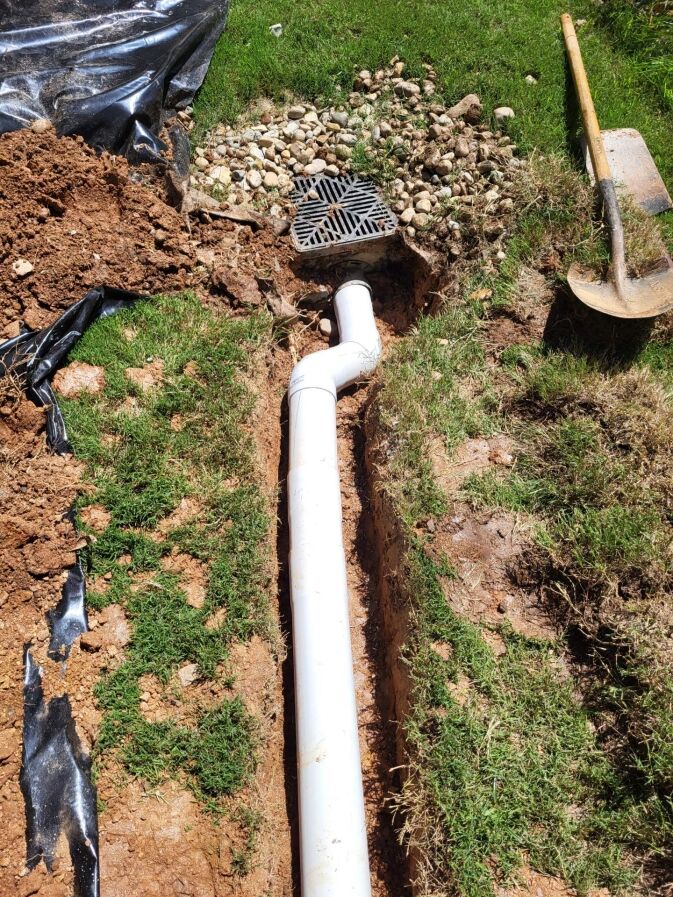
The visible symptoms are annoying enough on their own. Standing water that lingers for days, ruts and erosion channels cutting through the lawn, mulch washing away every storm, a driveway that turns into a creek, mosquitoes breeding in the low spots, and grass that refuses to grow anywhere near the trouble area. The invisible symptom is the one that costs money, because that water is soaking into the ground right beside your foundation.
North Georgia clay is the root of it. Clay soil absorbs water slowly and drains slower still, so heavy rainfall sits on the surface instead of percolating down. Add a yard that slopes toward the house instead of away from it, downspouts dumping straight onto the ground at the corners, hard surfaces like driveways and patios shedding everything toward one area, and low spots left behind from construction, and you've got water with nowhere to go and plenty of time to find its way in.
Our approach starts by figuring out where the water comes from and where it should end up, which means walking the property and reading the slope during the estimate. From there, the work might involve trenching in perforated pipe surrounded by gravel to intercept and carry water off, regrading to fill dips and establish proper fall away from the structure, extending downspouts and discharge lines far enough out to matter, or setting a channel drain across a driveway or entry.
When it's done right, the yard drains within hours instead of days and stays usable. Grass comes back in the bare patches, erosion stops, and the soil against your foundation stays considerably drier, which takes pressure off the walls below grade. Our warranty coverage backs the system, and most customers find this is the least expensive water problem they'll ever solve.
Properties collect water in different ways, so here's a rundown of the solutions we install.

Gutters do an excellent job collecting roof runoff and a poor job disposing of it when the downspout ends 2 feet from the wall. Our crews extend those lines underground and carry the discharge well away from the structure, which removes a surprising volume of water from the foundation area. On many homes, this single correction handles a good portion of the problem.
Existing drain lines frequently discharge too close to the house or have collapsed, clogged, or disconnected somewhere along the run. We locate where the current system fails, then extend or replace the pipe so water actually reaches a proper outlet. Solid French drainage work depends as much on where the water ends up as on where it gets collected.
Paved surfaces shed nearly everything that lands on them, and a driveway sloping toward the garage or house delivers a lot of water to exactly the wrong place. Installing a channel drain across the low end intercepts that flow and pipes it somewhere useful. Simple as this fix sounds, it resolves plenty of garage flooding calls we get.
Water management outside directly affects what happens below grade, so our drainage service frequently ties into foundation work. Perimeter drains at the footing, corrected soil slope against the wall, and proper discharge routing all reduce the hydrostatic pressure pushing moisture through concrete.
The workhorse of most drainage projects is a trench containing perforated pipe wrapped in filter fabric and backfilled with gravel, which collects subsurface and surface water and carries it to a discharge point. Depth, slope, and outlet placement determine whether the system performs for decades or clogs within a few seasons.
Soil that slopes toward a house sends every bit of rainfall straight to the foundation, and it's one of the most common issues we find. Reworking the grade to establish fall away from the structure, along with filling the low areas holding water, redirects runoff before it ever becomes a problem. Regrading pairs well with French drains when a property has both a slope issue and a volume issue.
Some situations call for solutions beyond a standard drain line, including catch basins in persistent low spots, dry wells, swales, or discharge into a suitable outlet on the property. Our recommendations depend on your soil, slope, lot size, and where the water can legally and practically go. Effective yard drainage comes down to designing around the property you actually have.
Before we recommend a repair, we look at where water is reaching the foundation and how the surrounding soil and drainage may be contributing. Our foundation waterproofing work can involve exterior excavation, leak repair, membranes, coatings, and drainage changes suited to the property.
Finished or unfinished, a basement can become uncomfortable and difficult to use when water stains, damp surfaces, or musty smells keep returning. We tailor our basement waterproofing services with options such as interior drainage, moisture management, sump pump integration, and targeted leak repairs.
After we examine cracks, wall movement, and other structural warning signs, we explain which concerns need attention and which ones may simply need monitoring. Our foundation repair methods include crack injection, carbon fiber reinforcement, stitching, and stabilization for bowing foundation walls.
Because the crawl space sits beneath much of your home, excess moisture there can affect framing, insulation, odors, and indoor comfort. We provide crawl space repair and encapsulation using drainage, vapor barriers, dehumidifiers, vent fans, fungicide treatments, and full sealing systems when appropriate.
Where a gravity-fed drain can't carry water away, we may suggest a pump system that collects and removes it before the basin overflows. Our sump pump installation service covers new pumps, replacements, drainage connections, and backup recommendations for basements and crawl spaces.
For an existing structure that has settled or shifted, we start by evaluating how the movement is affecting the foundation and the areas above it. Through our foundation stabilization services, we can install helical piers, lift settled sections, reinforce load-bearing areas, and provide added structural support.
From bouncy spots to noticeable slopes, changes in a floor may trace back to damaged joists, weakened beams, or inadequate supports in the crawl space. We approach floor leveling and structural repairs with solutions such as jacking, framing repairs, beam reinforcement, support systems, and stabilization.
Drainage work involves digging up your yard, so knowing who you're dealing with matters.
Reading how water moves across a property is a skill built over decades, and we'll show you what we're seeing so the plan makes sense before anyone picks up a shovel.
Ownership here is local and veteran-held, which means the person who quotes your job is the same one standing behind it afterward.
Acorn Finance gives customers a way to handle the project now and pay for it gradually, which beats watching another season of erosion go by.
Walking the property, assessing the drainage, and quoting the work comes at no cost to you.
Veterans, active-duty military, police officers, firefighters, EMTs, and other first responders get 10% taken off their total.
Qualifying projects come with warranty protection stretching from 10 years to lifetime coverage, and the terms depend on the scope of work.
A French drain can collect and redirect water when runoff or subsurface moisture keeps gathering in the same part of a yard. Effective French drains and yard drainage plans also consider grading, downspouts, soil conditions, and a suitable place for the collected water to exit.
A simple residential drain may not require the same approval as major grading or structural work, but the project scope and discharge location matter. Marietta issues grading and building permits, so homeowners should check with the city before a French drain installation changes the land, connects to another system, or affects a public area.
Georgia clay can hold water and drain slowly, so a contractor must plan the trench, pipe, aggregate, slope, and outlet around the actual site conditions. French drains and yard drainage systems give excess water a controlled route instead of letting it sit near landscaping, driveways, crawl spaces, or foundations.
Low areas, compacted soil, poor grading, short downspouts, driveway runoff, and water flowing from higher ground can leave a yard soggy after rain. A drainage professional traces the water's path before recommending grading corrections, pipe extensions, driveway drains, or another yard drainage solution.
Grading may provide the simpler fix when the ground slopes toward the house and surface runoff causes the problem. A French drain may make more sense when water collects below the surface or when grading alone can't create a practical route away from the affected area.
FAQs reviewed by Allen Aschwege, owner of A&A Waterproofing, an experienced waterproofing service based in Marietta, GA.
A thoughtful drainage plan can help protect your lawn, driveway, crawl space, basement, and foundation from recurring runoff. Contact A&A Waterproofing to schedule a free estimate now.
Business Name: A&A Waterproofing
Address: Marietta, GA, 30064
Phone: 770-443-1155
Business Hours:
Mon - Sat: 8:00 AM to 6:00 PM
Sunday: Closed
Hometown Heroes Discount
We're proud to offer 10% off for veterans, active-duty military, police officers, firefighters, EMTs, and other first responders as a thank-you for your service.
Comprehensive Warranty Coverage
We stand behind the quality of our work. Warranty coverage varies by service and repair, with options ranging from 10-year warranties to lifetime warranties on qualifying projects.