
Some houses sit in a spot where gravity simply refuses to help. The land is flat, the basement floor is below every possible drainage outlet, and water that collects down there has nowhere to go on its own. Homeowners in that situation know the routine: a hard rain rolls through, and somebody heads downstairs with a shop vac and a bad attitude. At A&A Waterproofing, we've been handling sump pump installation in Marietta, GA, and the surrounding areas since 1996, and a properly sized system takes that job off your list permanently. Water gets collected, lifted, and sent away from the house before it ever reaches the floor.
Owner Allen Aschwege leads A&A Waterproofing, a veteran-owned waterproofing and foundation repair company serving the Marietta, GA, area. Our team installs new pump systems, replaces units that have worn out or failed, ties pumps into existing interior and perimeter drainage so everything functions together, and walks customers through backup options for storm and power outage protection.
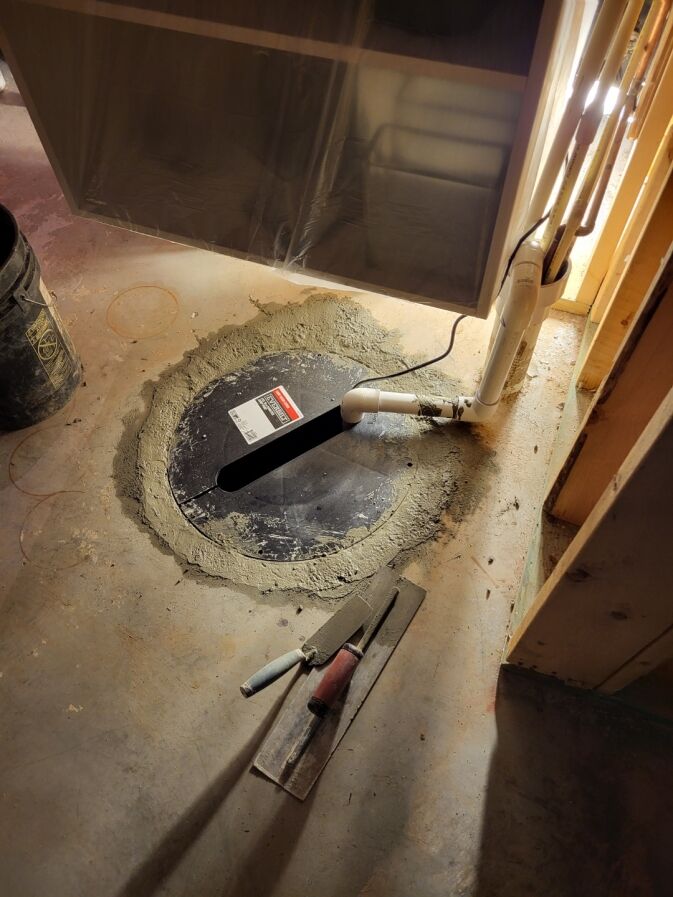
The problem tends to reveal itself during the worst possible weather. Water seeping across the floor, a drainage system that fills faster than it empties, a pump cycling constantly without gaining ground, or an older unit that hums and does nothing at all. Anything stored down there gets ruined, finished spaces take damage that shows up in the drywall weeks later, and the cleanup eats an entire weekend.
Elevation is usually what's behind it. A basement or crawl space sitting lower than any nearby outlet has no gravity path for water to follow, so drainage collected around the footing has to be lifted mechanically to leave the building. Flat lots, high water tables, and clay soil that holds rainfall all make the volume worse. Pumps that were undersized for the property to begin with, or that have simply aged past their service life, fail exactly when demand peaks.
Our installation starts with the numbers, since matching the pump to the actual volume your home handles is what separates a system that works from one that struggles. We set a basin at the lowest point, connect it to your perimeter or interior drain lines so water flows there naturally, install a properly sized unit with a check valve, and run the discharge line far enough from the foundation that the water doesn't circle right back. Backup options get discussed openly rather than pushed.
The result is a basement that stays dry through storms that used to mean trouble. Nobody has to monitor the forecast. The drainage system finally has somewhere to send what it collects, and the wet floor becomes something you tell stories about. Warranty coverage stands behind the installation, and a good system quietly does its job for years.
We plan each system around the amount of water entering the space, the existing drainage setup, and the property's available discharge options.

Homes without any existing system get a complete setup, from excavating the pit through connecting the discharge. Our team sizes the unit for the water volume, floor layout, and lift height involved, since an undersized pump in a wet basement is barely better than no pump. A properly matched basement sump pump runs less often, lasts longer, and keeps up when it counts.
The basin is where everything collects, and its placement determines whether the system captures water or misses it. We set the pit at the true low point of the space, size it for the volume the property generates, and seal it appropriately to keep humidity and radon from rising through. Getting this piece right the first time saves a great deal of trouble later.
A pump performs best as one part of a complete system rather than a stand-alone fix. Interior perimeter drains, footing drains, and crawl space drainage all get tied into the basin so collected water actually reaches the pump. Coordinating sump pumps with the drainage feeding them is what makes the whole setup reliable.
Water lifted out of the basin needs to end up somewhere that keeps it from returning, which means running the discharge well away from the foundation. Our crews plan the route around your landscaping, driveway, and property lines, and freeze protection gets factored in for the cold snaps Georgia occasionally throws at us. Discharge that dumps too close to the house creates a loop where the pump keeps pumping the same water.
Low crawl spaces flood the same way basements do, and a crawl space sump pump handles that water before it soaks the ground and raises humidity throughout the house. Placement takes into account the drainage layout, the encapsulation system if one is present, and where discharge can practically run. Pumps in these spaces get selected with accessibility in mind, because nobody wants to crawl under a house to service equipment regularly.
Most units last somewhere in the range of seven to 10 years, and the failure usually announces itself through constant running, odd noises, or a unit that stops responding entirely. Swapping out an aging pump takes far less time than a new installation, and we'll inspect the basin, check valve, and discharge line while we're in there.
Storms knock out power at precisely the moment a pump matters most, which is why battery backup and water-powered options come up in nearly every conversation we have. Our team explains how each type works, what it costs, and what it realistically protects against so you can decide whether it fits your situation. One important note: dedicated power outlet installation falls outside our scope, so an electrician handles that portion when a new circuit is required.
Rainwater that settles against your home can slip through cracks, joints, and porous foundation materials. With our foundation waterproofing service, we may excavate problem areas, seal exterior walls, apply membranes or coatings, and improve drainage so moisture has less opportunity to enter.
Recurring dampness can make a basement smell stale, damage stored belongings, and limit how comfortably you use the space. We plan basement waterproofing around the source of the moisture, using interior drains, targeted leak repairs, water-control systems, and sump pumps when the property calls for them.
Once foundation movement begins showing up as wall cracks, sticking doors, or bowed masonry, understanding the cause becomes an important first step. Our foundation repair work can include crack filling, injection methods, carbon fiber straps, structural stitching, and reinforcement for walls that have started shifting inward.
Underneath the home, humid air and ground moisture can create odors, encourage fungal growth, and contribute to damaged wood. We use crawl space repair and encapsulation methods such as cleanouts, sealed liners, drain systems, dehumidification, vent fans, and appropriate treatments to create a cleaner, drier environment.
Some water problems begin with the way rain travels across the lawn, driveway, or areas beside the house. Our French drains and yard drainage solutions can redirect runoff through properly placed channels, corrected grading, extended pipes, downspout adjustments, and drains for low or frequently flooded areas.
Changes in the soil beneath a house may cause sections of the foundation to sink, settle unevenly, or lose dependable support. Through foundation stabilization, we can use helical piers, lifting methods, and load-bearing repairs to support affected areas of an existing home or building.
A sloping hallway or springy floor may be connected to worn joists, undersized supports, weakened beams, or movement below the home. Our floor leveling and structural repairs can address those conditions through selective jacking, framing restoration, added crawl space supports, beam work, and floor-system reinforcement.
Installing equipment that protects your home should come with some assurance about who installed it.
Thirty years of pulling water out of Marietta basements means we know what these systems face here, and we'll explain the sizing and setup so nothing about the recommendation is a mystery.
Veteran ownership and local roots mean the crew doing the work lives around here too, and word travels fast in a community like this one.
Financing arranged through Acorn Finance lets customers get protection in place before the next storm rather than after it.
Assessing the space, measuring what's needed, and quoting the work costs nothing.
Those who serve or have served in the military or as first responders receive 10% off their project.
Qualifying installations carry warranties running from 10 years up to lifetime coverage, depending on what the job entails.
A sump pump removes water that collects in a basin before it spreads across a basement or crawl space floor. A sump pump installation works best as part of a complete drainage plan that guides incoming water toward the pump and sends the discharge safely away from the foundation.
You should test the pump regularly and arrange professional maintenance at least once a year, especially before periods of heavy rain. Pouring water into the basin can show whether the float activates the pump and whether the discharge line carries water away properly.
A battery backup can keep removing water when a storm knocks out electricity or the primary pump stops working. The Federal Emergency Management Agency (FEMA) recommends backup power for sump pumps because a power failure can leave a home exposed during the same weather that sends water toward the foundation.
A contractor selects a suitable basin and pump, connects the system to the interior drainage, and routes the discharge away from the home. The project may also require a dedicated electrical outlet, so homeowners should confirm electrical and permit requirements before sump pump installation begins.
Consider replacement when the pump runs constantly, makes unusual sounds, cycles irregularly, struggles to remove water, or fails during a simple basin test. A professional can also check the float, check valve, power supply, discharge pipe, and pump capacity before recommending a new sump pump.
FAQs reviewed by Allen Aschwege, owner of A&A Waterproofing, an experienced waterproofing service based in Marietta, GA.
A properly planned pump system can move water out before it becomes another wet-floor cleanup. Contact us for a free sump pump installation estimate in Marietta, GA, or a surrounding area.
Business Name: A&A Waterproofing
Address: Marietta, GA, 30064
Phone: 770-443-1155
Business Hours:
Mon - Sat: 8:00 AM to 6:00 PM
Sunday: Closed
Hometown Heroes Discount
We're proud to offer 10% off for veterans, active-duty military, police officers, firefighters, EMTs, and other first responders as a thank-you for your service.
Comprehensive Warranty Coverage
We stand behind the quality of our work. Warranty coverage varies by service and repair, with options ranging from 10-year warranties to lifetime warranties on qualifying projects.
